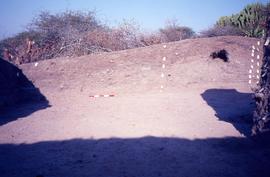
- 78/002/012
- Unidad documental simple
- 2016 -
Parte deFHYA curation of a selection from the Archaeological Collections at the KwaZulu-Natal Museum


4704 resultados con objetos digitales Muestra los resultados con objetos digitales
Parte deFHYA curation of a selection from the Archaeological Collections at the KwaZulu-Natal Museum
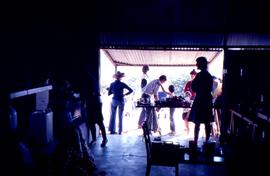
Slide of camp kitchen at uMgungundlovu
Parte deFHYA curation of a selection from the Archaeological Collections at the KwaZulu-Natal Museum

Field Report written by Martin Hall
Parte deFHYA curation of a selection from the Archaeological Collections at the KwaZulu-Natal Museum
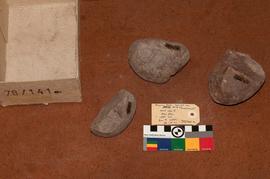
Parte deFHYA curation of a selection from the Archaeological Collections at the KwaZulu-Natal Museum
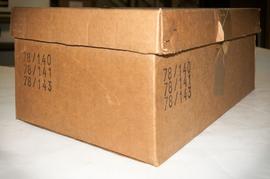
Parte deFHYA curation of a selection from the Archaeological Collections at the KwaZulu-Natal Museum
[Source - eThembeni Cultural Heritage Management for FHYA, 2016, using KZNM materials: (141a) NE Quadrant - 3 split pebbles, plain pottery, bone, china, wire & seed. (141b) NE Quadrant - Twist of wire, iron & pottery. (141c) SE Quadrant - 2 pieces of pottery, 2 pieces of china & seeds. (141d) SE Quadrant - 4 pieces of pottery including 1 flat rimsherd. (141e) NW Quadrant - Pottery, bone & china. (141f) SW Quadrant - Dung, pottery, china & seeds. (143) Trench 2 - 3 glass beads.]

Parte deFHYA curation of a selection from the Archaeological Collections at the KwaZulu-Natal Museum

Parte deFHYA curation of a selection from the Archaeological Collections at the KwaZulu-Natal Museum

Parte deFHYA curation of a selection from the Archaeological Collections at the KwaZulu-Natal Museum
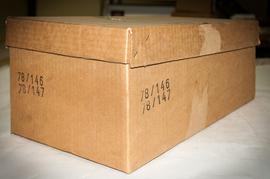
Parte deFHYA curation of a selection from the Archaeological Collections at the KwaZulu-Natal Museum
[Source - eThembeni Cultural Heritage Management for FHYA, 2016, using KZNM materials: (146a) Pottery, bone & stone flakes from trench 3: 0-10. (146b) Bone, pottery, beads & seeds from trench 3: 10-20. (146c) Pottery, stone (split pebble) from trench 3:20-30. (146d) Pottery from trench 3: 30-40. (147a) Tooth & pottery from trench 3: ext. 0-10. (147b) Bone, pottery & beads from trench 3: ext. 10-20. (147c) Pottery, bone and 2 split pebbles from trench 3: ext.20-30.]

Parte deFHYA curation of a selection from the Archaeological Collections at the KwaZulu-Natal Museum

Folder Oliver Davies uMgungundlovu 2831AD 4
Parte deFHYA curation of a selection from the Archaeological Collections at the KwaZulu-Natal Museum
Negatives relating to excavations done by Oliver Davies at uMgungundlovu
Parte deFHYA curation of a selection from the Archaeological Collections at the KwaZulu-Natal Museum
[Source - Chloe Rushovich for FHYA, 2019: File contains the FHYA selection from the Natal Museum Archaeological Negatives relating to excavations done by Oliver Davies at uMgungundlovu]

Negative of photograph of hearth at the uMgungundlovu excavation (front view)
Parte deFHYA curation of a selection from the Archaeological Collections at the KwaZulu-Natal Museum

Negative of photograph of hearth at the uMgungundlovu excavation (front view)
Parte deFHYA curation of a selection from the Archaeological Collections at the KwaZulu-Natal Museum
FHYA curation of a selection from the uMgungundlovu Archaeological Material at AMAFA
[Source - Chloe Rushovich for FHYA using material provided by eThembeni Cultural Heritage Management, 2018: The Five Hundred Year Archive aims to research and lead enquiries into aspects of the southern African past, in the periods predating the existence of European imperial and colonial archives. The uMgungundlovu site (meaning ‘The secret conclave of the elephant ‘) served as the capital of the Zulu Kingdom between 1829 and 1839. When Dingane kaSenzangakhona succeeded Shaka to the Zulu Kingship in 1828 he followed his predecessor’s custom of building a number of large military amakhanda in the heart of the kingdom. Located within the eMakhosini uMgungundlovu was the largest of these amakhanda. Fully established by 1829, it served as the royal residence of Dingane and his isigodlo, his principal advisors and a large garrison of his favoured regiments. Umgungundlovu is the best preserved of all the capital amakhanda established during the height of the Zulu Kingdom. As an archaeological archive it has, and can still, shed light on both the physical layout and the social dynamics of 19th Century aristocratic society. The FHYA appointed the eThembeni Cultural Heritage to compile a comprehensive database relating to the uMgungundlovu archaeological site, including collating descriptions of collections in curation; associated and peripheral materials such as museum documentation, accession information, registers, individual items; and historical notes pertaining to the site. The FHYA selection from the Archaeological Collections at the Amafa/Heritage KwaZulu Natali provincial heritage conservation agency consists of material identified by eThembeni Cultural Heritage as having been excavated at uMgungundlovu. Specifically, this material has been excavated by John Parkington, Mike Cronin, Oliver Davies, Rob Rawlinson, and Frans Roodt. The FHYA arranged this material into ‘series’ which are named after the primary excavator, and then into further ‘subseries’ which are named after the year in which the material was accessioned. Within these ‘subseries’ are ‘files’ containing digital ‘items’ which consist of collection boxes and their contents.]
uMgungundlovu - Undiagnostic Pottery and associated items
Parte deFHYA curation of a selection from the uMgungundlovu Archaeological Material at AMAFA
[Source - Chloe Rushovich for FHYA, 2019: File contains material identified by eThembeni Cultural Heritage Management for FHYA using AMAFA materials as 'undiagnostic pottery', and a box with markings.]
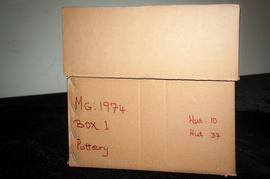
Parte deFHYA curation of a selection from the uMgungundlovu Archaeological Material at AMAFA
[Source - eThembeni Cultural Heritage Management for FHYA, 2016, using AMAFA materials: Undiagnostic Pottery. Hut 10, 35, 37. Umbundu II - centre front.]
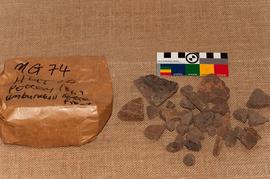
Parte deFHYA curation of a selection from the uMgungundlovu Archaeological Material at AMAFA
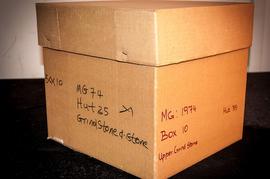
Parte deFHYA curation of a selection from the uMgungundlovu Archaeological Material at AMAFA
[Source - eThembeni Cultural Heritage Management for FHYA, 2016, using AMAFA materials: Grindstones. Hut 35.]

Parte deFHYA curation of a selection from the uMgungundlovu Archaeological Material at AMAFA
[Source - eThembeni Cultural Heritage Management for FHYA, 2016, using AMAFA materials: Grindstones. Hut 35.]